Before Reytd, at the web agency, I integrated one of the big review platforms into a client's store. The integration itself was about as much work as I'd expected. Testing it was another story.
There was no test environment. No sandbox, no test keys, no pretend store. So we did what everyone does: built against the live account, with real products, and tested on the real store. Every time I sent an order through, a little voice asked whether a real customer was about to get an email asking them to review something they'd never bought.
Nothing terrible ever happened. But "nothing terrible happened" is a low bar for a developer's afternoon.
The good example
Stripe showed years ago how it should feel. You get test keys next to your live keys, a test mode in the dashboard that looks exactly like the real thing, and you can break whatever you like without anyone being charged. You build with confidence, because nothing you do in test mode can reach a real customer.
So when I started Reytd, I copied the good parts.
What's in the sandbox
Every store on Reytd gets a sandbox, on every plan, Free included. It's a second copy of the store, with its own products, orders, reviews and review requests, right next to the real ones.
- One address, two keys. The API lives at the same address in both. Your token decides where you are:
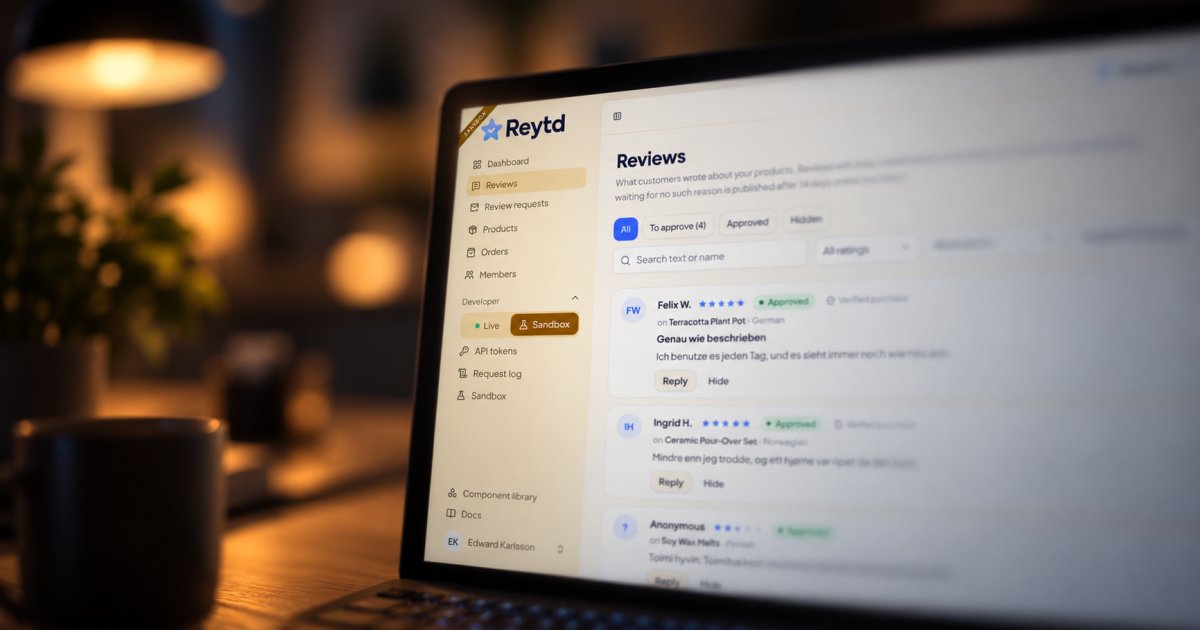
rytd_live_for the real store andrytd_test_for the sandbox, just like Stripe's keys. Its answers tell you which one replied (livemode), so your integration can check it's never writing test data to the real store. - One switch in the app. Flip between Live and Sandbox in the sidebar. The sandbox gets its own colour and a ribbon across the corner, so you never mistake test data for real data, and every link and bookmark stays in the mode you opened it in.
- Test data with a click. No time to build a test catalogue? Add ten made-up products at a time, some in colour groups. Add a test order that's already delivered, and once your review request flow is on, watch it start a review request. Add twenty reviews at a time, in six languages, two waiting for approval and some with a reply from the store.
- Emails that never leave. Review requests in the sandbox are built exactly as in live, then kept in the email log instead of being sent. No real customer, no little voice. And Send now skips the waiting, so you don't have to come back in a week to see the email.
- The whole loop. Open the review link in a test email, leave a review, and see it in the app, without leaving the sandbox. On Pro, read it back from the API too.
- Widgets that show your test reviews. The sandbox has its own widget address, so a staging site can show the sandbox's stars and reviews while the real store shows the real ones.
- A clean slate whenever you want. Made a mess? That's what the sandbox is for. Clear sandbox empties it in one go, and the real store isn't touched. Then add fresh test data with a click and start over.
Around it are the things you'd expect from an API you're going to live with: an API reference anyone can read without an account, a Postman collection to try every call, and a log in the app of your integration's requests from the last 30 days, with what each one sent and what came back.
Build it, break it, clear it
I built the sandbox because I wished I'd had one all those times. It's the part of Reytd I'm most likely to show other developers, and the part I'd miss most if it were gone.
If you've ever tested on a live store and held your breath, give it a try: start free, switch to the sandbox, and break things. Nobody will get an email. Product reviews for headless and custom stores walks through an integration from the first call.